
Gaia

Dear readers ❤️
Last time I wrote to you, I shared with you a bit about my journey into motherhood and the ways it reshaped me at the level of body, identity, and memory. Today however, I would like to step back and widen the lens a little bit. I want to move from the personal and into the mythic once again, as I so often love to do.
As many of you know, Fractals of Gaia began as a space of reverence and an offering to Gaia as origin, as mother, as the living ground from which life arises. But beneath that, it has always been inspired by her very own fractals: the quiet, repeating patterns that echo through time, through myth, through the body, and through the psyche.
Because what happens in the body happens in the family, and What happens in the family becomes lineage. And lineage, stretched across time, becomes cosmology.
Motherhood then is no different.
In both myth and memory, as we will soon learn, the expansion of awareness seems to coincide with a painful labor. When something new comes into being, the ground, and the womb from which it emerges must strain in the act of bringing it forth.
From Gaia birthing the sky to Eve bearing the weight of awakened humanity, the pattern is ancient. Again and again, the feminine Principle stands at the threshold where consciousness changes form and history answers her passage with blame, fear and revulsion.
If motherhood reshaped the inner time and space of my own life, then by its nature, it has also placed me inside a lineage of women whose pain has been mythologized, moralized, and profoundly misunderstood for centuries.
I have come to understand it over time, not merely as a personal event, but as a pattern written into the very structure of femininity and consciousness itself.
Today, I would like to offer you my thoughts on what that strain truly means to me now, because what if the suffering was never a curse at all?
What if the pain, and contraction was the necessary compression through which vast awareness becomes embodied, the necessary cost of consciousness entering matter and becoming aware of itself upon its arrival.
To understand this pattern more fully, I want to turn to three lenses: the Greek myth of Gaia and Uranus, the story of Adam and Eve, and Indigenous narratives that speak of descent and emergence. Each, in its own way, holds a fragment of the same maternal threshold, and together, they may illuminate something about who we are, and what it means to be us in the world we are creating. And So let us begin dear readers today with the myth of Gaia and Uranus to start.

Gaia and Uranus
I've been searching for a sign
Everything is gonna be alright
Got no religion, but tonight
Baby I've got heaven on my mind
Becky Hill
As many of you know, the end of February marks the close of Aquarius season, a sign saturated with symbolism around awareness itself. Aquarius, the fixed air sign of the zodiac, has long been associated with intellect, vision, and collective consciousness. In many spiritual and philosophical traditions, the element of air corresponds to the realm of mind. It is a symbol for breath, thought, cognition, all the invisible currents that shape perceptions of the mental sphere.
While Gemini and Libra also express different dimensions of air such as curiosity and relational balance (we will explore them in their own seasons) Aquarius represents its most elevated form. It is not merely air as dialogue or exchange, but air as sky, a vast, overarching, impersonal, and at times, detached reality.
This symbolism deepens when we remember that Aquarius is ruled by Uranus, the primordial sky god of Greek mythology. Unlike the later Olympian gods such as Zeus, Athena, and the Titans, Uranus is not a personality emerging within creation. He is primordial. He is the unbounded field itself, the expanse that makes dimension possible. The sky then becomes a metaphor for expansion, transcendence, and the emergence of consciousness.
And yet, in the myth, Uranus does not arise alone. He is birthed by Gaia. Matter gives rise to sky. Density gives rise to dimension. The earth generates consciousness and expanse from herself.
But her creation does not remain harmonious.
As the story goes, Once Uranus exists, he presses down upon Gaia, trapping their children within her womb. The boundless sky becomes oppressive. And the expanse becomes compression. A symbol of mind overriding the body that births it.
It is from this tension that Gaia births Cronus, yes, that Cronus, whom we have visited often in earlier writings. Later identified with Saturn, he is born of sky and earth. And with his arrival, something entirely new enters the cosmos: Time.
So far, this myth has unfolded as an analogy for matter, space, and now time, the triadic structure within which we still find ourselves today.
Time, at its essence, is structure and containment. With Cronus now in existence, the infinity of Uranus becomes bound to order. Eternity becomes duration. Endless consciousness becomes finite mind. What was once infinite becomes measurable and what was once eternal becomes mortal. It's the birth of consciousness now subject to sequence.
All children born thereafter are born into time, not held in eternity any longer , but carried forward through succession. Cronus then overthrows his father, He castrates Uranus, thereby severing vastness from the earth. Time rises by cutting down eternity, its existence hinges on its absence.
Yet in doing so, Cronus becomes governed by fear. Terrified that his own children will one day overthrow him, he devours them.
Here we encounter the mythic image of entropy with matter being now consumed by time. Father devouring child. Structure turning against what it was meant to hold.
But the pattern does not end there.
Once born into Cronus, we begin our own rebellion. If Cronus overthrew vastness, we attempt to overthrow time itself. The same way he over threw his father, we try to overthrow father time.
We resist aging. We resist death. We chase immortality, digital permanence, spiritual escape. We long to return to the vast and unbounded sky.
To be born into time is to inherit the struggle of self-awareness. Once consciousness becomes bound to sequence, to a before and after, it begins to measure itself. And in measuring itself, it becomes aware of its ending and the ending of all others it measures itself against.
The mind, aware of duration and its own mortality, rebels. We long for eternity even as we are shaped by entropy. We raise cathedrals toward the sky, carve our names into stone, write words we pray will outlive us. We bring children into the world not only out of love, but out of a quiet hope that some fragment of our being will echo forward long after we have returned to dust.
We crave permanence in bodies that age. Entire industries rise from this fear. We conceal wrinkles, resist decline, glorify youth as though it were salvation, a holy grail hidden inside smooth skin. We avert our eyes from death, as if refusing to name it might delay its arrival, as if time could be bargained with through denial.
And still we chase transcendence from within decay, pursuing it through substances and fleeting moments that burn as briefly as we do, bound to finitude themselves.
Most destructive of all, In resisting time, we drift from matter. We reach upward toward the sky and forget the earth that holds us. In that forgetting, we fracture, distanced from body, from nature, from the maternal ground that first made consciousness possible. We resent the limits of the flesh, even though it is the very vessel that allowed us to awaken at all.
We turn against ourselves, and against the material that bore us, resenting the boundaries of the body that gave us form. We oscillate between infinity and containment never at peace with either while our bodies become the battleground of that oscillation.
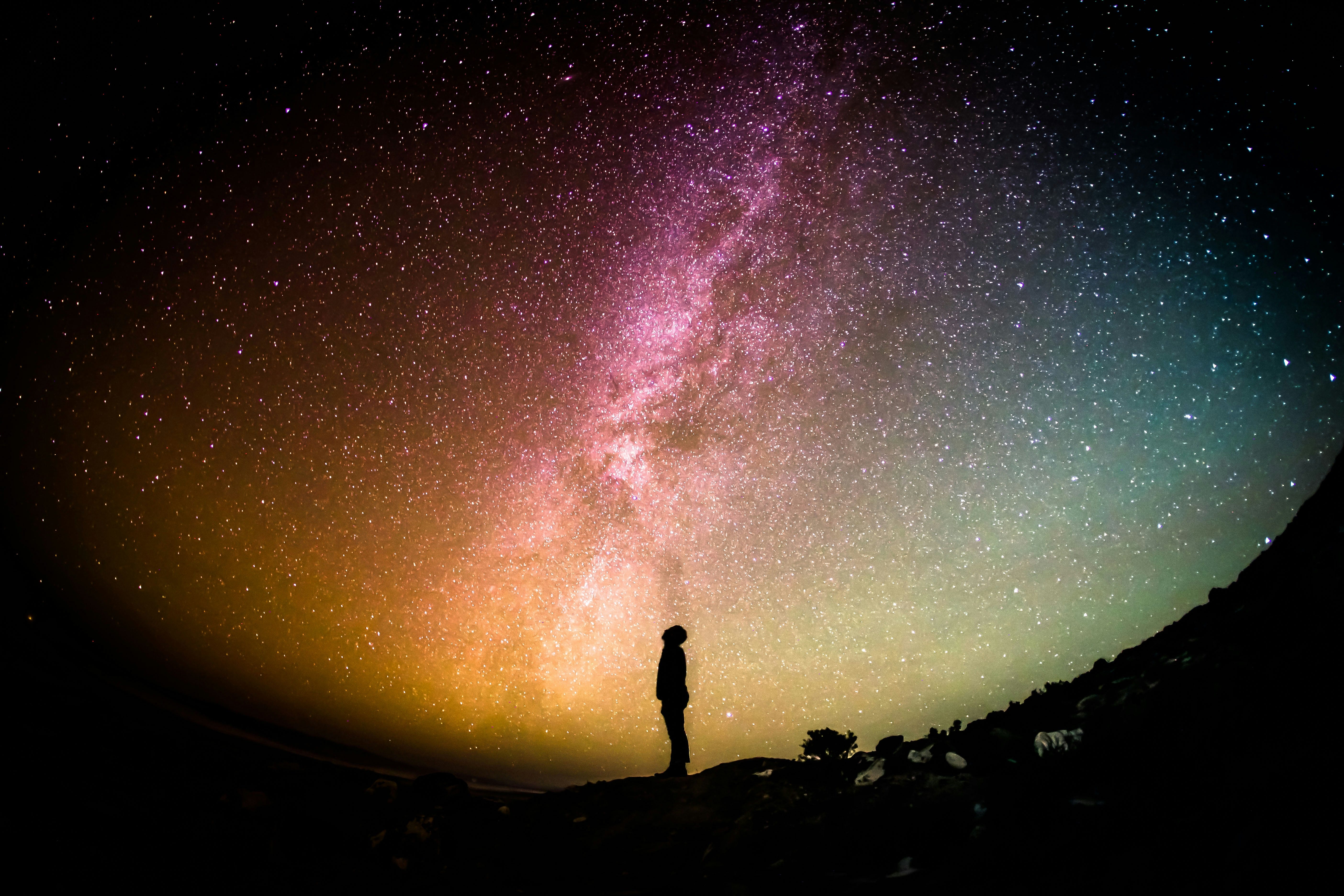
What if the middle path is not to overthrow at all? But in breaking the pattern itself?
What if peace comes not from escaping or overthrowing father time, but from accepting that eternity expressed through duration gives rise to something even more elegant, such as value and sacredness itself?
The sky without earth is ungrounded, but Vastness without time becomes suffocating, a boundless expanse with no contour, and no contrast.
When sky and earth merge, when Uranus meets Gaia, when mind meets body, life becomes possible, and yet life without beginning, without ending, without sequence would lose its meaning. It would have no edge, no rhythm, no story and no meaning.
Time as Cronus is the third principle. When he enters, he brings restriction. But it is precisely this restriction that allows value to arise. Limits create significance. Sequence creates narrative. Finitude creates reverence.
Under the rule of Cronus, our lives become immeasurably more precious because they are bounded. It is the awareness of ending that births care, humility, and devotion. And strangely, what we cultivate within finitude, things like love, meaning, reverence is what seems to echo beyond it. The very fact that a life ends is what allows its beauty to endure.
The task is not to destroy structure, nor to dissolve into abstraction, but to remember the ground that birthed them both. To be fully embodied is to step into the best of both worlds.
And so I return to Gaia. I return to motherhood not as punishment, not as failure, but as the threshold of existence itself. The place where creation crosses from potential into form.
To carry a child is to participate in time entering space and matter. To birth is to feel eternity narrow into a single breath, a single cry. The infinite collapses into flesh.
To mother is to hold the tension between sky and earth, between the vastness of a mind brought forth and the limitations that will shape it. It is to witness consciousness descend into boundary. To stand at the crossing point where the eternal accepts finitude and becomes a life.
And I have stood there. Painfully maybe, but with awe and gratitude.
I have felt my body become a threshold. I have felt time move through me, not as theory but as blood, as weight, as rupture. Motherhood did not abstract me into myth, it pressed me into matter. It showed me that creation is not clean or symbolic, it is cellular, embodied, irreversible.
If there was pain, it was not punishment. It was the cost of participation. The cost of becoming a bridge between what has no limit and what must.
Next time, I will turn to another origin story, one that has shaped the Western imagination for centuries. The story of Adam and Eve. A story often framed as disobedience, exile, and punishment, but is actually one that may reveal something far more profound about consciousness, embodiment, and the cost of knowledge. If Gaia and Uranus speak to the birth of form and the tension between sky and earth, then Eden speaks to what happens when awareness enters the garden. What is gained. What is lost. And what that ancient narrative might still be trying to teach us about time, matter, and the strange dignity of being human on this earth.
And until next time, thank you for being here dear readers ❤️
This is such a great line: What if peace comes not from escaping or overthrowing father time, but from accepting that eternity expressed through duration gives rise to something even more elegant, such as value and sacredness itself?
This is the only way to truly live.
Always interesting, educational and amazing and naturally you interweave your role as mother into myth.
I have felt my body become a threshold. I have felt time move through me, not as theory but as blood, as weight, as rupture. Motherhood did not abstract me into myth, it pressed me into matter. It showed me that creation is not clean or symbolic, it is cellular, embodied, irreversible. 💚
Yes! Motherhood forced me to stop living in my head too